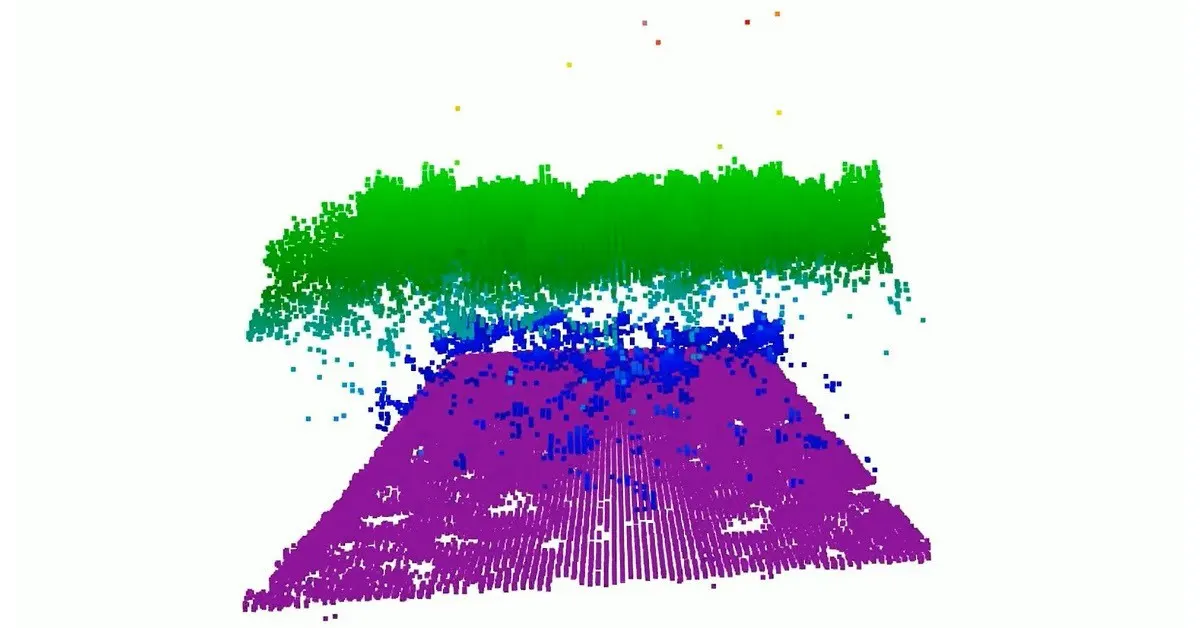
NASA described progress on its Concurrent Artificially-intelligent Spectrometry Lidar System, or CASALS, in an October 21, 2026, technology feature. The instrument is designed to gather broader swaths of three-dimensional surface measurements rather than leaving large gaps between isolated tracks. Its approach combines a compact lidar design with plans for intelligent observation and processing.
A different way to steer the measurement
The feature explains that CASALS uses changes in laser wavelength and an optical grating to direct pulses across a flight path, reducing reliance on moving steering mirrors. It also describes an airborne prototype campaign conducted in November 2024. The work demonstrates a development stage; it does not establish that CASALS is already an operational satellite instrument.
Further work identified in the report includes increasing the instrument’s swath and adding onboard processing before a space-ready prototype is developed. That sequence matters because performance in an aircraft and readiness for a space mission involve different operating constraints.
Why coverage belongs beside resolution
Our analysis is that mapping products need to be assessed on more than their most detailed measurement. A buyer also needs to understand where measurements exist, where information has been inferred and how the dataset changes between collection periods. High detail along a narrow track does not automatically provide equally detailed information everywhere around it.
Consider a hypothetical team comparing terrain datasets for infrastructure planning. It would need to examine coverage, timing, uncertainty and the intended use before deciding whether one product can support its analysis. A compelling three-dimensional rendering cannot replace that assessment.
The practical promise of the research is a more complete measurement pattern. The next questions concern how that pattern performs under additional conditions and how the resulting data can be processed and validated. Clear distinctions between prototype results and future objectives make the technology easier to evaluate without diminishing its ambition.